The Power of Seeing Sooner
In healthcare, timing can be everything. Identifying a potential health concern in its earliest stages often provides the widest range of options for management and care. For decades, healthcare has relied on a combination of professional expertise, patient-reported symptoms, and diagnostic tests. Today, a new element is entering the equation: artificial intelligence (AI).
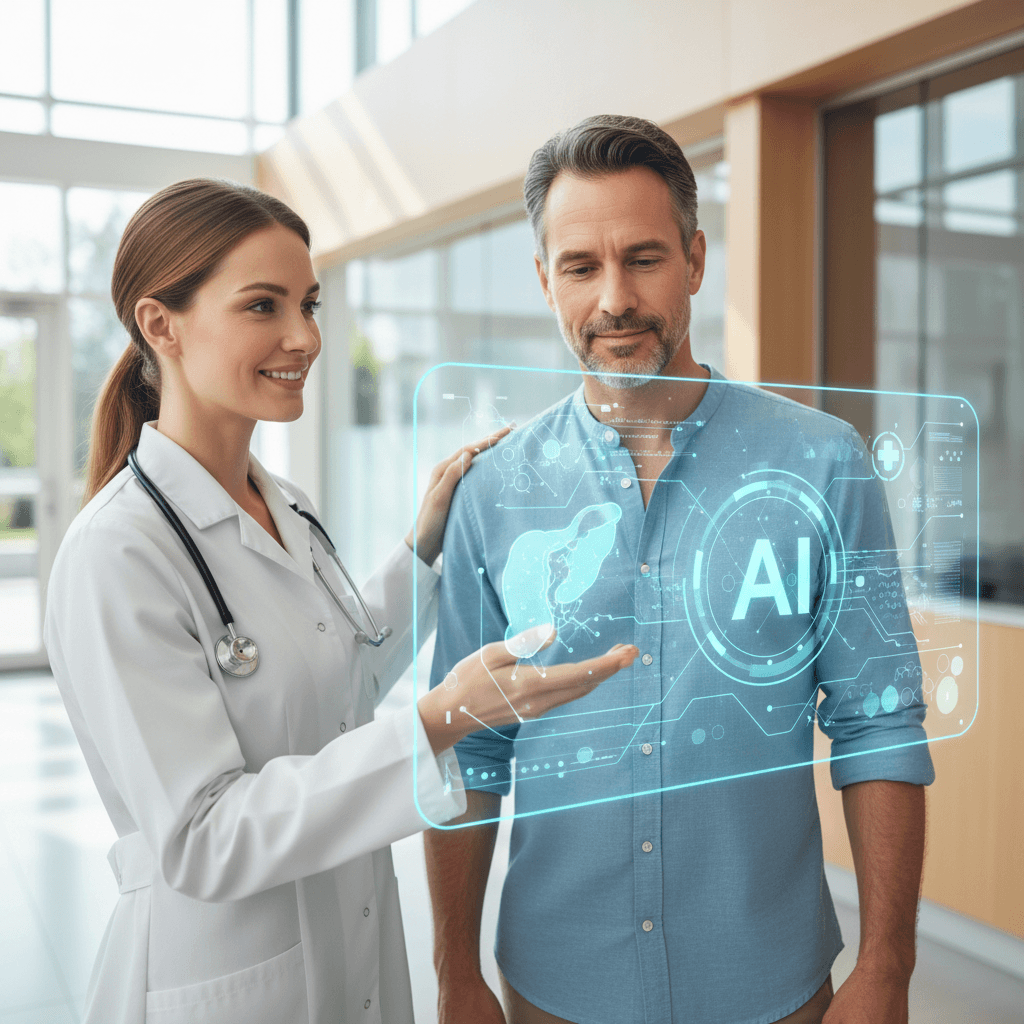
AI is not a replacement for your doctor. Instead, it's becoming a powerful support tool, designed to augment the skills of healthcare professionals and help them make more informed decisions, faster.
How AI Supports Early Detection
At its core, AI excels at recognizing patterns in vast amounts of data—often on a scale beyond human capability. In a diagnostic context, this can be applied in several key ways:
- Analyzing Medical Images: AI algorithms can be trained on thousands of medical images, such as X-rays, CT scans, and retinal scans. They learn to identify subtle anomalies or patterns that may indicate the early signs of a condition. This can help radiologists or ophthalmologists by flagging specific areas for closer review, acting as a second set of digital eyes.
- Sifting Through Health Records: Electronic Health Records (EHRs) contain a wealth of information. AI tools can analyze this data—including lab results, clinical notes, and patient history—to identify individuals who may be at a higher risk for developing certain conditions. This allows providers to recommend earlier or more frequent screenings for at-risk populations.
- Interpreting Complex Data: From genomic sequences to real-time data from wearable devices, modern healthcare is generating more information than ever. AI can help make sense of these complex datasets, connecting dots that might not be immediately obvious and providing insights that can point toward a need for further investigation.
A Collaborative Future
The goal of using AI in diagnostics is not to automate the doctor's role, but to enhance it. AI provides data-driven insights, but the final interpretation, diagnosis, and treatment plan remain firmly in the hands of qualified medical professionals. They bring the essential context, empathy, and holistic understanding of a patient's life and well-being that technology cannot replicate.
As these tools continue to be carefully validated and integrated into clinical workflows, they hold the potential to make proactive healthcare more accessible. By supporting providers in identifying concerns sooner, AI is helping to shape a future where early detection is more powerful than ever.