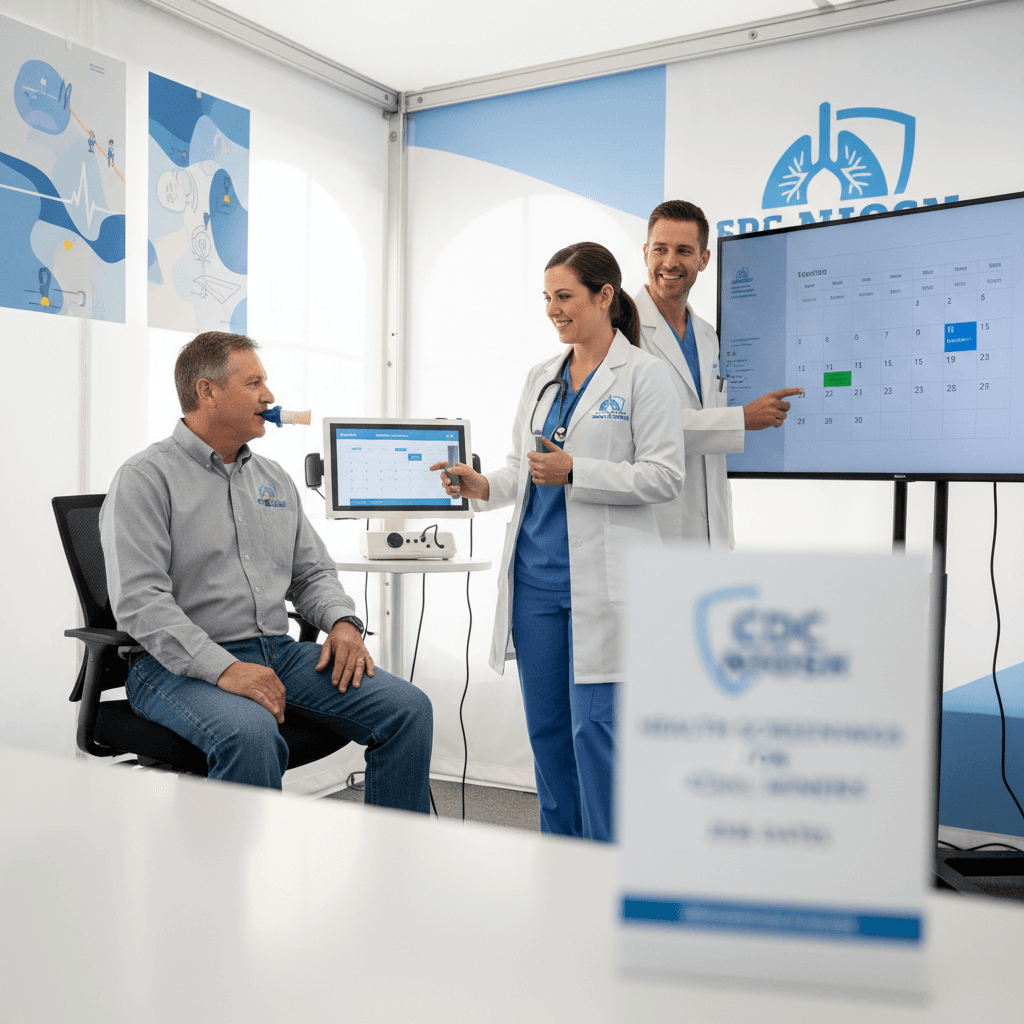
The Centers for Disease Control and Prevention (CDC) has announced that its National Institute for Occupational Safety and Health (NIOSH) will continue its annual program of free, confidential health screenings for coal miners. This initiative is a critical tool in the fight against coal workers’ pneumoconiosis, commonly known as black lung disease.
Using a fleet of mobile health units, the NIOSH program travels directly to mining communities, making it easier for active and former miners to get checked for early signs of respiratory illness. By bringing these vital services to the people who need them most, the program removes significant barriers to care, such as travel time and cost. The agency's long-term commitment is clear, with screening dates already being announced for as far out as 2026.
At Medicup, we see this initiative as a powerful real-world example of a principle that drives digital health: meeting patients where they are. While NIOSH uses physical mobile vans to bridge the access gap for a specific, high-risk occupational group, telehealth platforms like ours use technology to achieve the same goal for a broader population.
This proactive screening model is exactly the kind of preventative care that improves long-term health outcomes. It highlights the need for innovative solutions to reach underserved or geographically isolated populations. Digital health can be a powerful partner in these efforts. Following an in-person screening from a mobile unit, for instance, a patient could use telehealth for convenient follow-up consultations, specialist referrals, and ongoing disease management, creating a more seamless and accessible healthcare journey.
By prioritizing early detection and removing barriers to access, the NIOSH program provides a valuable blueprint for the future of healthcare—one that is more proactive, equitable, and patient-centered.
Source: [CDC Newsroom](https://tools.cdc.gov/api/embed/downloader/download.asp?m=132608&c=764138)